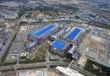
The "heavy weapon of the country" has officially reached the top, and China will achieve great-leap-forward development in the field of supergravity.
CTOnews.com, July 16 (Xinhua) according to CCTV news, the experimental building of the world's largest hypergravity centrifugal simulation and experimental device was officially topped in the West Corridor in Hangzhou early this morning, which means that important progress has been made in China's basic scientific research in the field of hypergravity.
According to reports, the experimental building will provide the highest quality hypergravity field for global hypergravity experiments in the future, and will become a hypergravity multidisciplinary open and shared experimental platform with the largest capacity and the widest range of applications in the world. China's research in related fields will also achieve a leap from following, parallel running to leading.
Lin Weian, deputy director of the office of the hypergravity field construction headquarters of Zhejiang University, the contractor, said that the hypergravity experimental device of Zhejiang University includes model machines, heavy-duty machines, high-speed machines, three centrifuges, and related airborne devices, with a total land area of 89 mu and a total construction area of 34560 square meters.
Among them, the supergravity field produced by the core device centrifuge will have the effect of space-time compression on the objects in the container, through this device, researchers can simulate the geomorphological changes of mountains and rivers in a very short time. In addition, it can make the space smaller and the time faster, so it will help Chinese scientists to complete some difficult projects.
To put it simply, the gravity field we feel in our daily life is called the constant gravity field, that is, the gravity field in which the acceleration of gravity is 1 g, while those greater than 1 g are called hypergravity.
When CTOnews.com inquired about the data, it was found that Shenzhou-11 astronaut Chen Dong said that during the launch of the rocket, it had to withstand about 5.5g hypergravity, and such hypergravity often caused the astronauts to have chest tightness, shortness of breath and other reactions, so they had to train on the ground.