Huawei successfully realized the research and development of full-stack autonomous controllable MetaERP, and completed the replacement of the old ERP system.
Thanks to CTOnews.com netizens Ting Zhou Crane and Mr. Aviation for their clue delivery! CTOnews.com, April 20, Huawei officially announced the realization of self-controlled MetaERP research and development, and completed the replacement of the old ERP system. Today, Huawei held a MetaERP commendation meeting on "Heroes crossing the Dadu River" in Dongguan Xi Liubeipo Village Park to recognize the relevant teams and individuals who have made significant contributions to this project.
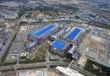
▲ photo from Huawei ERP (CTOnews.com Note: Enterprise resource planning, Enterprise Resource Planning) is one of the most critical and important enterprise IT applications. Since the introduction of MRP Ⅱ in 1996 and the continuous iterative upgrade of ERP version, ERP, as the core system of Huawei enterprise management, has supported Huawei's rapid development for more than 20 years, its annual output value of hundreds of billions of dollars, and business operations in more than 170 countries around the world.
In 2019, Huawei decided to start replacing the old ERP system and start the research and development of an independent and controllable MetaERP system. This is the most extensive and complex project in Huawei's history. Over the past three years, Huawei has invested thousands of people together with industrial and ecological partners to develop a very large-scale cloud native MetaERP for the future, and successfully completed the replacement of the old ERP system.
Up to now, MetaERP has covered 100% of Huawei's business scenarios and 80% of its business volume, has gone through monthly, quarterly and annual tests, and achieved zero failure, zero delay and zero account adjustment.
Huawei MetaERP is autonomous and controllable in full stack. Based on the root technologies such as Huawei Euler operating system (openEuler) and GaussDB, Huawei uses cloud native architecture, metadata multi-rent architecture, real-time intelligence technology, etc., to improve business efficiency and operation quality.